

What to Consider for Fixed Installation Led Display?
Let me be honest with you. Putting up a fixed installation led display is not like hanging a picture on your wall. You cannot just pick a spot, drill a couple of holes, and call it a day. This is a serious investment. Whether you are setting up a screen for a corporate lobby, a retail store, a control room, or an outdoor billboard, there is a lot to think about. Get it right, and you have a stunning visual tool that works for years. Get it wrong, and you are looking at constant headaches, unexpected costs, and a screen that never quite looks right. So let me walk you through what actually matters when you are planning for a fixed installation led display.
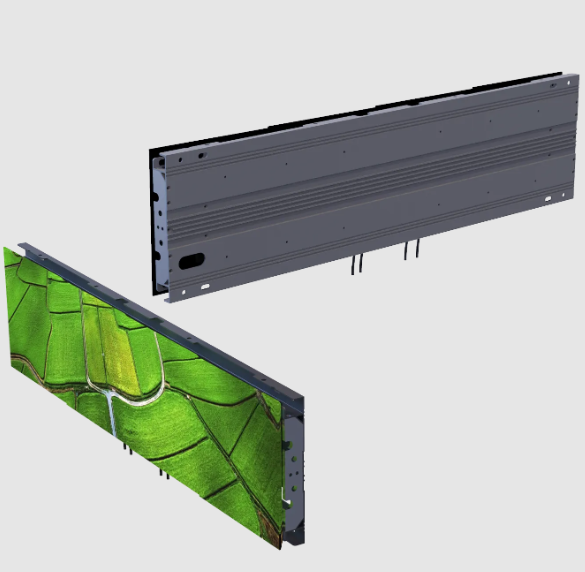
Match the Screen to Your Real World Environment
First things first. Where is this screen going to live? The environment dictates almost everything. An indoor screen and an outdoor screen are completely different animals.
For indoor spaces like conference rooms, showrooms, or broadcast studios, you are dealing with controlled lighting. People are usually standing pretty close to the screen. That means you need high resolution and fine image quality. A small pixel pitch, like P1.2 to P2.5, is what you want here. The screen does not need to fight against sunlight, so brightness levels around 600 to 1200 nits are plenty. Anything higher than that would just hurt people's eyes in a dark room.
Outdoor is a whole different game. Your screen will face rain, dust, direct sunlight, and temperature swings. You need high brightness, usually 5000 nits or more, so the content stays visible even when the sun is blasting down on it. You also need a solid IP rating. IP65 is the standard for outdoor fixed installation led displays. That means the cabinet is completely dust tight and can handle water jets from any direction. Do not skip this. I have seen cheap outdoor screens fail in six months because water got inside and fried the electronics.
Also think about the viewing angles. If your screen is going up on a building facade or a tall pole, people will be looking at it from different directions. A wide viewing angle of 140 degrees or more ensures that the image does not wash out when you are not standing dead center.
Pixel Pitch and Viewing Distance Are Two Sides of the Same Coin
This is where a lot of buyers get confused. Pixel pitch is the distance between the centers of two adjacent LED pixels, measured in millimeters. A P2.5 screen has 2.5 millimeters between pixels. A P10 screen has 10 millimeters between pixels.
Smaller pixel pitch means higher resolution and sharper images. But here is the catch. It also costs more. So you do not always want the smallest possible pixel pitch. You want the right pixel pitch for your viewing distance.
Here is a simple rule of thumb that actually works. Take the pixel pitch number in millimeters and multiply it by about 2.5 to 3. That gives you the ideal viewing distance in meters. For example, a P2.5 screen looks great from about 6 to 8 meters away. A P1.2 screen is perfect for closer viewing, like 3 to 4 meters. For outdoor billboards that people see from far away, a P6 or P10 is totally fine.
If you put a small pixel pitch screen too far from the viewers, you are wasting money on resolution nobody can even see. If you put a large pixel pitch screen too close, people will see the individual dots and the image will look blocky and cheap. So do the math before you buy.
Do Not Forget About Brightness and Contrast
Brightness is measured in nits. Indoor screens typically need 600 to 1200 nits. That is enough to overcome typical office or retail lighting without being blinding. Some high end indoor screens go up to 1500 nits, but that is usually overkill unless your space has a lot of windows and direct sunlight.
Outdoor screens need much more punch. You are competing with the sun, which can put out over 100,000 lux on a bright day. A good outdoor fixed installation led display should hit at least 5000 nits. For really sunny locations, 8000 to 10000 nits is even better.
Contrast ratio is another thing people overlook. This is the difference between the brightest white and the darkest black the screen can show. A high contrast ratio gives you deeper blacks and more vibrant colors. Look for a contrast ratio of 3000 to 1 or higher. Some high quality displays go up to 8000 to 1. That makes a real difference, especially for watching video content or displaying images with dark backgrounds.
Also, pay attention to refresh rate. If your screen is going to be filmed by cameras or shown on TV, you need a high refresh rate of at least 1920Hz. For stage events or broadcast studios, 3840Hz is the standard. A low refresh rate will show up as flickering lines or a rolling bar effect on camera. That looks unprofessional and can ruin a live broadcast.
Think About the Installation and Maintenance Before You Buy
Here is something that catches a lot of people off guard. How are you going to get to the back of the screen after it is installed?
If your screen is mounted on a wall with no space behind it, you need front maintenance capability. That means you can remove the LED modules from the front of the screen. A technician can pop out a faulty module, replace it, and put it back without ever going behind the wall. This is a lifesaver for tight spaces like elevator lobbies or shallow retail displays.
If you have plenty of room behind the screen, rear maintenance is fine. You walk behind the screen to access the cabinets and wiring. This is common for larger installations like stadium screens or building facades where there is a service catwalk.
Either way, think about this before you finalize the design. I have seen projects where someone installed a beautiful screen with no thought about maintenance, and then six months later a few pixels died. Suddenly they were looking at a huge bill just to access the damn thing.
Also consider the mounting structure. The frame that holds your fixed installation led display needs to be strong and level. For outdoor screens, it has to withstand wind loads. Some local building codes require wind resistance up to level 8 or 10. A cheap steel frame that rusts after a year is a disaster waiting to happen. Use galvanized steel or aluminum, and make sure everything is properly anchored.
Heat Management and Power Efficiency Matter More Than You Think
LED screens generate heat. That is just physics. But too much heat shortens the life of the LEDs and can cause color shifting or even complete failure.
A good fixed installation led display has proper heat dissipation built into the design. Some use passive cooling with aluminum heat sinks. Others use active cooling with fans. For outdoor screens in hot climates, you might even need air conditioning inside the cabinet enclosure.
Power efficiency is another big one, especially for screens that run 24 hours a day, 7 days a week. A more efficient screen uses less electricity, which saves you money every single month. Over a five year period, the difference in operating costs between an efficient screen and an inefficient one can be huge. Look for screens with energy saving features like automatic brightness adjustment. When the sun goes down, the screen dims automatically. You save power and you do not blind people walking by.
Maintenance Is Not Optional. Do Not Ignore It.
Once your fixed installation led display is up and running, the work is not over. Regular maintenance keeps the screen looking good and prevents small problems from becoming big ones.
Clean the surface regularly. Dust and dirt build up over time and reduce brightness. Use a soft brush or low pressure compressed air. For stubborn spots, a little alcohol on a soft cloth works fine. Never use a wet cloth directly on the screen.
Check for dead or stuck pixels. A few dead pixels might not seem like a big deal, but they spread. If you see a cluster of dead pixels, that module needs replacement. Most screens are modular, so you just swap out the bad module.
Also check the wiring and connectors. Vibration from wind or nearby traffic can loosen connections over time. A loose cable can cause flickering or partial signal loss. Catch it early and tighten it up.
Set up a routine inspection schedule. Monthly checks for indoor screens, weekly for outdoor screens in harsh environments. It takes maybe an hour, but it saves you from expensive emergency repairs later.
Why Quality Matters for Long Term Reliability
I saved this for last because it is the most important. A cheap fixed installation led display will cost you more in the long run. The initial price might look good on paper, but low quality components fail faster. The colors drift. The brightness drops. The power supplies die.
A reputable manufacturer with certifications like ISO 9001 or IATF 16949 is a safer bet. They have quality control systems in place. They test their products before they ship. They use good LED chips from known brands. That kind of reliability is worth paying for.
Look at the manufacturer's track record. Have they done similar projects? Do they have case studies you can look at? A company that has been around for years and has completed large scale projects, like stadium screens or broadcast studio walls, is more likely to deliver a product that lasts.
Also ask about the warranty. Two to three years is reasonable for a fixed installation led display. Some manufacturers offer extended warranties for an extra cost. Make sure you understand what is covered and what is not.
At the end of the day, your fixed installation led display is a long term asset. It is going to be on that wall for years, maybe even a decade. A few hundred dollars saved upfront is not worth years of frustration and repair bills. Do your homework, pick the right specs for your environment, and buy from someone you trust.

