

How to Design Led Video Wall for Events?
Designing an LED video wall for an event is important because depending on the type of event, an LED video wall can serve different purposes and use different designs. An awards show will require a different LED video wall design than a concert or a corporate conference. An LED video wall will be a great visual centerpiece to grab the audience's attention as well as serve as a great tool to set the mood of the event, but event organizers have to carefully think through the design of the wall before the event. In this guide, we will prepare you for the design of the LED wall.
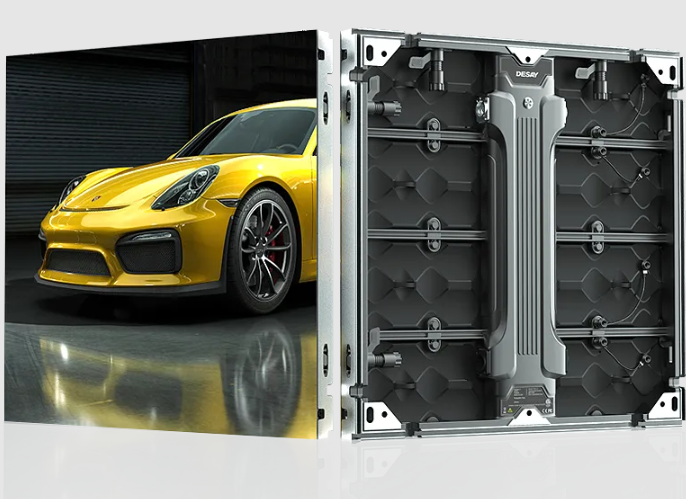
Begin with the Biggest Picture
Before you dive into dimensions and designs, answer this first: what is the primary purpose of the screen? Is it about helping someone in the last row see the keynote speaker’s face? Is it about building a giant immersive backdrop to inspire the audience? Is it about showing fast, high-energy content to hyped the audience? Is the screen being used for a big award show? Then it better be flawless for the camera in order to capture every detail. Those other projects, what do you think about them? Screens during the 93rd through 95th Academy Awards show a commitment to high-end visuals. This is industry leading work. This is where your design has to begin. Most important, this is the core purpose, this is the answer to your design problem. It will help in everything else that will follow.
Determine Appropriate Dimensions and Location
After outlining your objectives, you need to analyze your space. What is the maximum distance to the farthest viewer? A general guideline is the content should be readable from the farthest viewer, but you shouldn’t overdo it. Consider sightlines, too. Will the stage configuration, pillars, etc. obstruct anyone's view? You want to position your LED Video wall so the viewer sightlines, whether river front or upper most. It is about ensuring an inclusive experience for all. A strategically positioned video wall brings cohesion to the whole venue.
Choose the Right Pixel Pitch for the Best Viewing Experience
The most important factor when deciding to purchase a screen is something that is considered a bit technical: the screen's pixel pitch. Pixel pitch is the measurement that represents the distance from one pixel (or tiny LED) to the next pixel (or tiny LED) on a screen in terms of millimeters. Smaller pixel pitch numbers mean sharper images and tighter pixel grids. Therefore, for a TV studio or a place where the screen is supposed to be zoomed in on, you would need a pixel pitch of around 1.5mm or 1.8mm. For a high-stakes broadcast, you would want to use that same specification. On the other hand, if the screen is meant to be viewed at a big outdoor concert or in a big plaza, you would want to consider a pixel pitch around 10mm. From a distance, the screen will look great, and in this case, the larger pixel pitch is better for covering a larger space. The most important concept to consider when selecting a pixel pitch is how close your audience will be to the screen, and selecting the pixel pitch accordingly.
Consider The Location of The Event
Is there a venue your event will be held at? Is your event going to be indoors or outdoors? This influences work requirements a lot. Outdoor music festivals will definitely have different equipment and requirements than indoor corporate events. Indoor screens can be designed for greater detail, and richer colors while outdoor screens have to consider how to survive sunlight and rain, and how to be brighter than the sun. An outdoor display screen is designed for and built around different requirements than the big indoors screens, built to move. Thus, be honest about your venue. Designing the ideal led video wall is about the right choice for the environment surrounding it, even if for only a night event.
Maximing The Ovideo Screen potential
Amazing content is key to creating an engaging experience. Your creative moment is landing great content to use on the display: live feed video cameras trained on speakers or entertainers, or custom animations on display that work with the brand, custom animations, 3D naked-eye displays that create images that leap out of the display (a real wow moment). Your content will be the talk of the event. Be creative, be bold. Just keep in mind that content is to be created for the specific display you will be using, not for laptop or kiosk. Be specific an work with the experienced designers.
Reliability is Key
Most importantly, reliability is critical with the gear you use. You do not want an LED screen to fail you at a critical moment. This is where the reliance on experience comes into play. You need to work with a company. This is where a company’s reliability comes into play. Look for an experienced company. They should have at least twenty years in the industry with thousands of completed projects. They should have worked with Desay at least once. They have worked with some of the most challenging projects as Desay. If you have complete confidence in your equipment, you can focus on the performance of your show.
As an event organizer, you know what designing an LED video wall for an event is all about. You know what the end goal is, and the most important of all, you know the experience you want to achieve for your audience. Your focus should be on the audience. Rest will be taken care of the experts. Your event should be the most memorable of all at the end of the day.

