

Led Display Panel: Durability in Daily Use
Led Display Panel: Durability in Daily Use
On the street, in a conference room, or at a concert, a vivid LED display panel can be a focal point in the room. What people see is more than a bright eyecatcher, but a durable, long-lasting panel. Every LED display panel is the product of extensive engineering from a team of experts. The displays are the results of designs built to withstand the rigors of everyday life. From the blazing sun to minor bumps, a quality LED display panel can handle it. It is this durability that allows the panel to communicate the user's desired message. The display is bright and performs well after each use. Let's examine the reasons why some of these engineering feats are more expensive than the rest and why the more expensive options are worth it.
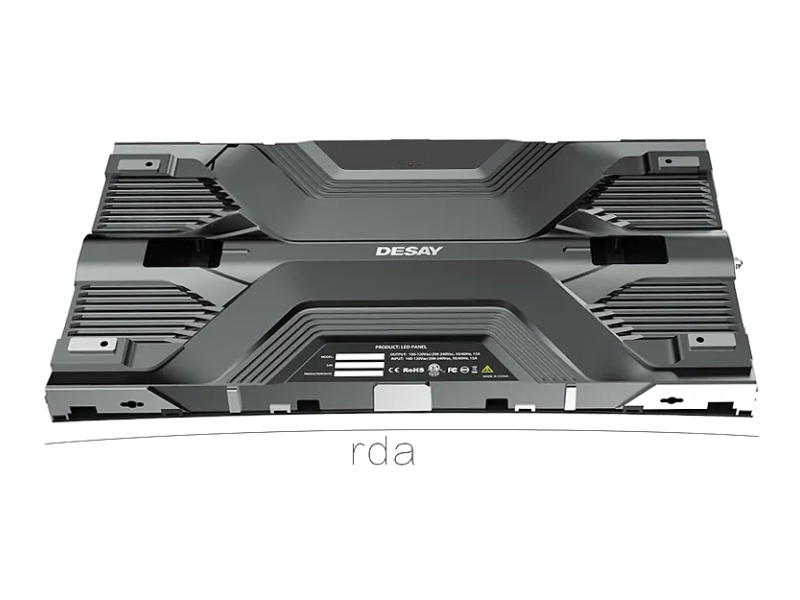
Tough and Strong: Designed to Withstand Physical Strain
Throughout the years of use of LED display panels, they face many physical challenges, especially the rental and touring applications where machinery are constantly moved around. With these applications, the displays not only have to be visually captivating, they must also be sturdy and perform mechanical functions. Consider the transportation display panels go through. They are loaded and unloaded from trucks, they are cased in stacks, and are assembled in a short period of time. They face potential impacts and vibrations and, unlike some equipment, these displays are made to withstand the physical strain they face.
We construct the display panels in a manner that enables us to mitigate these concerns. Aluminum is a common choice for fabricating cabinets because of its strength to weight ratio. For example, some panels intended for rentals have a design focus on weight, and thus these 500x500mm panels are designed to weigh only 5.6 kg; a design choice that facilitates the ease of hand transport while still maintaining structural integrity. Additionally, the internal components are designed to remain in place despite the vibrations that may accompany road travel. It is difficult to transport road cases without vibrations, and the cases should remain closed to protect the internal components. Loose locks on video walls can be troublesome, and to mitigate this; we employ curved locking elements that can adjust roughly 10 degrees in either direction. These structural design features contribute to the overall decreased flex in a led display panel, granting the hardware a long life, thus proving itself to be a smart choice for mobile operations.
Built to Last: Environmental Challenges
Moisture, dust, and extreme temperatures can threaten any electronic equipment’s longevity and functionality. Out of home advertising led display panels face the elements outdoors and need to be able to withstand diverse weather, plus indoors, it can be extremely variable. The ingress protection rating, or dust protection rating, or more commonly known as the IP rating, is a substantial factor to a display’s ability to withstand additional weather factors. Employees feel more secure and less stressed when they know the display is protected to international standards and is of high IP rating. IP65 rating and above is standard to be able to withstand any elemental weather factors. This certification also means the display is fully protected against dust ingression and can withstand low pressure and high volume water jets from any direction.
Another considerable concern is the temperature changes that may occur. When out in the sun, a display screen can become extremely hot. Conversely, extremely cold snowy nights can cause components to become brittle and shatter. Stability is tested during the manufacturing process. This includes a process known as temperature cycling, where the displays are moved between two extremes, such as -20°C to 80°C, over and over again in order to verify that the display can perform and withstand the internal temperature changes and stresses. In addition to tested features and design components that add reliability, real-world usability also comes into play. Tight design and gaskets sealed in place, as well as the use of corrosion-proof screws and connectors, keep moisture and dust from getting into the internal electronics. This process and method to keep the environment around the displays in mind ensures that a high performing LED display can stand the temperatures and climate of many different locations.
Keeping Performance Over Time
To withstand the rain and drops is one thing, but to maintain optical performance is another. In the supplying optical performance over the item's life, the user \is LED display panel's consistent brightness and color accuracy. All LED light sources exhibit a gradual decrease in light output over time: this is called lumen depreciation. Displays of a higher quality are designed to minimize lumen depreciation. Industry standards discuss a useful life a nd the brightness of the display relative to preset thresholds. Manufacturers perform a set of brightness decay tests in which displays are operated continuously over the course of thousands of hours to predict the aging process.
How well a LED display screen maintains its color consistency across its various modules is critical. A top quality LED screen display vendor utilizes calibration and control technologies to achieve same color and brightness. This is essential as individual LED clusters can age at inconsistent rates. Some vendors achieve a uniform image using advanced point to point image data processing with on site brightness and color corrections. Overall, the processing of the image must be done in a reliable manner, exhibiting high refresh rates, sometimes as high as 7680Hz, and 16-bit gray scale processing. This ensures the image is smooth, flicker-free, and accurately depicts the source content throughout the long functional life of the display.Durability For Users
At the end of the day, the most sophisticated design of an ecosystem that incorporates a led display panel is the one that is also practical to maintain and repair. The scope of an ecosystem's durability includes the serviceability of the display and how easily it can be kept in an optimal state. For rental companies and end-users, a design that offers quick front and rear serviceability is a major perk. This capability enables service personnel to swap out a defective module or power supply without having to deconstruct the complete screen architecture, resulting in considerable downtime during critical events. This level of serviceability closing is a sign of a design serving the intended purpose.
The component usage indicates a willingness to prioritize long-term reliability. One example includes the addition of gold contacts on printed circuit boards by a few manufacturers. While it gets expensive, gold does not oxidize or corrode, providing a stable connection over long periods of time and over many plug/unplug iterations. This design detail ensures electrical connection reliability and prevents signal degradation to lower the chance of failure. Protecting the most unshielded mechanical design artisans include design step-overs, and their particular product line even includes the addition of a custom-fitting corner protector and a quad design that considerably enhances the LED’s impact resistance, directly mitigating the danger of rough handling during rapid assembly and disassembly. All these led screen panel designs step beyond simple hardware to offer a design that is truly reliable.

