

Fine Pitch Led Display: Installation Considerations
You have made the right choice in investing in a fine pitch LED display. The stunning image quality and seamless visuals will definitely transform your focus area, be it a studio, control room or even a corporate lobby. However, there is a critical step in the journey from a box of panel displays to a stunning visual display. That step is the successful installation of the display. It is this step that will elevate the LED display from its potential to fully utilized. The purpose of this blog is to highlight the critical factors when it comes to installing a fine pitch LED display, in order to provide your project the best chance at success from day one.
Pre Installation Planning: The Most Important Part
The installation of an LED display starts before the first panel is even mounted. There is considerable detail and planning that needs to be done to ensure the project runs smoothly and is successful.
Site Survey and Environment: A professional site survey is crucial. Measuring the walls is only a small part of the job. Installers evaluate structural integrity and the pathways for tools and equipment. They check for dust and high temperatures to determine how to manage the thermal environment and cooling. Ambient lighting and viewing distances also matter. Lastly, they assess potential obstacles, available power sources, and obstructions. All of these factors influence product selection.
Understanding Your Goals: What is the main purpose of the display? If it’s a broadcast studio, like for major awards shows, color precision is critical. Is it a control room with a need for 24/7 operation? Or a corporate boardroom where impactful presentations are the focus? Depending on the answer, specifications differ: pixel pitch, processing capacity, brightness, and more.
Infrastructure and Power: Fine pitch displays function best with clean, stable, and properly rated power. Planning for dedicated circuit power is essential. In addition, the data infrastructure is also a key component to consider. High resolution displays need massive amounts of data which means data pathways need to be planned. To avoid messy cabling and complicated cables runs, plan for conduit or cable trays during construction.
Finding the Right Fit
A fine pitch display is like a precision instrument. Its mounting structure needs to be just as precise and rigid.
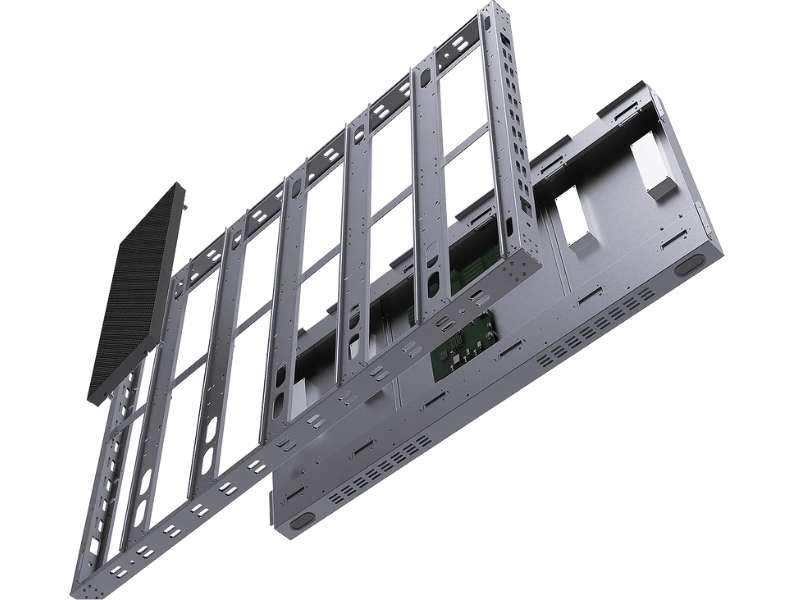
Wall Assessment and Support: Not all walls are built the same. The mounting surface needs to be able to withstand the weight of the display and any extra equipment that comes with the frame. For large installations such as outdoor projects or large indoor video walls, a steel support structure is often needed. This structure needs to be level. If it isn’t, there are alignment problems over the surface of the display.
Mounting System Selection: Choosing a front or a rear access mounting system is really important. Front serviceable cabinets mean maintenance and module replacement can be done from the front. This is needed for installations that have a solid wall at the rear of the display. Rear service systems require space behind the screen, and the mounting system should have micro adjustment capabilities so that individual cabinet seams can align.
Thermal Management and Ventilation: Electronics do not operate well under high heat, which is generated by fine pitch LEDs. Heat must be dissipated to extend the lifespan of the LEDs and to avoid color shifts or failures. The design of the installation must provide adequate airflow around the display. This may require passive ventilation, embedded quiet fans, or even full HVAC systems for closed spaces. Effective thermal management is central to reliability, a key principle emphasized by manufacturers leading the industry and deploying equipment worldwide.
The Precision of Assembly and Alignment
This is where the magic and the meticulous attention to detail converge. Installing a fine pitch display is a craft.
Cabinet and Module Alignment: Each cabinet, containing a matrix of modules, must be aligned with its neighbors with sub-millimeter precision. Given the tiny pixel pitch (e.g. 1.5mm, 1.875mm), even a fractional misalignment will create a visible "step" or seam, destroying the seamless effect. Installers use precision levels, lasers, and adjustment mechanisms built into the mounting system to achieve a perfectly flat, uniform screen surface.
Signal Distribution and Cable Management: An installation is considered professional if it is “clean.” Power and data cables need to be routed, tagged, and secured. Signal distribution for big displays is done via sending and receiving cards. The network is to be designed to mitigate latency and packet loss. Cables need to be protected at pinch points and from interference.
Calibration and Color Matching: The real technical work begins once everything is physically installed and powered on. Each cabinet and module needs to be calibrated electronically. This means he needs to adjust the output of countless red, green, and blue LEDs to guarantee uniformity in color and brightness across the board. Without this, patches of the display screen would show tiles of different color temperatures. The screen must be perfectly homogeneous, especially for applications needing high color fidelity. These applications include professional and advanced broadcast systems.
Control and System Integration
Your display is the center of a larger audiovisual system and ecosystem. It is the centerpiece and does not exist in a vacuum.
Controller and Processing: Picking the best controller and video processor is essential, ensuring all functionalities align with the display's resolution and the input signal format. Other features to look out for include: scaling, picture in picture, and advanced color management. Consider the processor as the command center, refining the content to display on the LED screen.
Control System Integration: Consider how users will interact with the display. Do you want to embed it in an overarching control system like Crestron or AMX? Is a control system going to be software-based on a PC? Will it have a simple button panel on the wall? Thinking about how users will control the display in advance helps make the installation run more smoothly.
Management and Source Setup: Installers configure and test the content sources, including all media players, PCs and live camera feeds. They make sure the client’s management software is installed and working, and that client staff are taught how to use it.
Post Installation: Maintenance and Testing Planning
The job is not completed when the image first appears on screen.
Thorough Testing and Burn-in: A premium installation will include a burn-in period. During this stage the display will be run through different test patterns and content will be varied. This should be able to catch and correct any early life defects. All pixels and colors will need to be checked.
Crafting a Maintenance Plan: Even the most reliable technologies need a little TLC on a regular basis. Take a few minutes and talk to your provider about a spare parts strategy (like keeping a few spare modules onsite for critical installations), dust cleaning schedules, and software update routines. Manufacturers are often able to offer you recommended best practices since they have done thousands of installations and have that data to rely on.
Training and Final Documentation: You should receive warranty information, system manuals, and as-built diagrams. Most importantly, key personnel should receive training on basic operation, troubleshooting, and support contact.
Learning from Global Precedents
Examining major global projects helps in building our case. Installing the fine pitch screen at the Academy Awards was not only a technical installation; it required highly detailed planning for temporary, mission-critical installations. The screen had to function flawlessly in the world’s sight. The large-scale 3D display in Shibuya, Japan, had a completely different set of complicated installation requirements for structural wind loads, weatherproofing, and public safety. Each completed project emphasizes that installing fine pitch LED displays is a specific type of specialty. It integrates structural engineering, thermal dynamics (or thermal management), data networking, and high-resolution video (or high fidelity video) calibration, among many other areas.
This level of planning and design shows that you are going beyond buying a product; you are investing in a process. Choosing the right professionals means that your fine pitch LED display will provide everything that is stated in the specs: impact, reliability, and optical performance for many years. When you work with professionals, you are building a solid foundation for your vision, as well as a solid display image.

